

Mosquito virus in Guinea: study reveals discreet circulation in eight regions
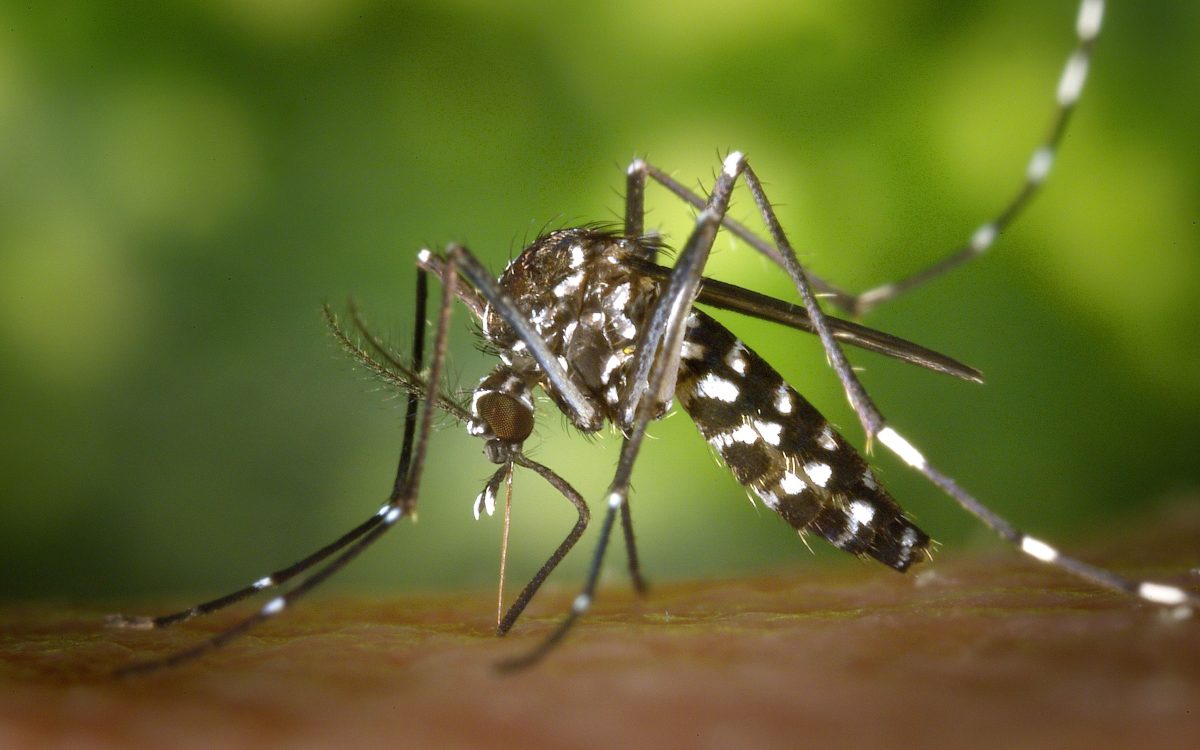
Detailed macro shot of an Aedes albopictus mosquito on human skin. © Pixels
A survey carried out in eight regions of the country reveals widespread, but discreet, circulation of viruses transmitted by insects. Zika and West Nile virus top the list. The study does not report any current epidemic, but above all it shows how difficult these viruses are to spot.
No large-scale epidemics have been officially reported, and yet these viruses are circulating. This is what a study conducted by Guinean researchers from the Guinea Infectiology Research and Training Center (CERFIG), attached to Gamal Abdel Nasser University of Conakry, in collaboration with French teams.
This work was published in l’International Journal of Epidemiology, an international scientific journal published by Oxford University Press on behalf of the International Epidemiological Association. Posted online on September 23, 2026, they appear in volume 55, number 5 (October 2026), under the title “Spatial distribution and factors associated with the seroprevalence of arboviruses in Guinea: a nationwide cross-sectional survey”, which can be translated as “Geographic distribution and factors associated with seroprevalence of arboviruses in Guinea: a cross-sectional survey at the national level».
Researchers analyzed the blood of 1,098 people for traces of past contact with eight viruses. Result: 25% of them (between 22 and 28% taking into account the margin of error, after statistical adjustment) had encountered at least one.
Arbovirus, antibodies, seroprevalence: what are we talking about?
The arbovirus are viruses transmitted to humans by insects or other arthropods, most often mosquitoes, sometimes ticks. The study looked for eight: dengue, Zika, West Nile virus, Usutu virus, chikungunya, O'nyong-nyong virus, Rift Valley fever and Crimean-Congo hemorrhagic fever.
The researchers did not look for patients. They looked for type antibodies in the blood IgG, these traces that the body keeps after encountering a virus. Measuring the proportion of people who carry these traces means calculating what scientists call seroprevalence. The Dr. Salifou Talassone Bangoura, lead author of the study, defines it as follows:
“Seroprevalence corresponds to the proportion of people in the population in whom we found IgG antibodies against arboviruses. In other words, the proportion of people who have been in contact with the virus at some point in their life and who have developed antibodies against this virus. »
He emphasizes one point: “The presence of these IgG antibodies in a person does not mean that they are currently ill. It rather indicates a previous infection. » The figure of 25% therefore means that one in four people tested had already encountered one of the eight viruses, often without knowing it. For the researcher, this “implies that arboviruses circulate in regions without us realizing it.”
Why such a survey?
In Guinea, surveillance of these diseases relies mainly on patients who visit health establishments. Between 2000 and 2024, it confirmed 947 cases of yellow fever, including 284 deaths, two cases of dengue, including one death, and one case of chikungunya, with no deaths. But this method misses many infections, especially those that cause no or mild symptoms.
The signs of these diseases also resemble those of malaria, the primary cause of consultation, which complicates the diagnosis. Laboratory capacities are limited and health workers are still unfamiliar with these viruses. A few studies existed, but they focused on specific groups or areas: none had yet measured population exposure on a national scale.
How the investigation was conducted
Between May and July 2023, field teams visited randomly selected households in the capitals of eight administrative regions: Conakry (Matoto commune), Boké, Faranah, Kankan, Kindia, Labé, Mamou and N’Zérékoré. In total, 367 households, or 1,098 people aged 5 and over, participated.
Seven teams, each made up of three investigators, a supervisor and a nurse or doctor, questioned the families about their housing, access to water, use of mosquito nets and the surroundings of the homes. They also noted the places where mosquitoes can breed: waste, wrecks, vegetable gardens. Four drops of blood taken from the fingertip were then placed on filter paper and then analyzed with CERFIG. Adults provided written consent; for minors, that of a parent or guardian was required.
What the results reveal
Zika came in first, with 12.0% of those tested, just ahead of West Nile virus (11.6%). This is followed by Usutu virus (3.8%), O’nyong-nyong virus (2.4%) and dengue (2.0%).
The differences between regions are significant. Overall exposure reaches 61.9% in Kindia and 56.0% in Boké, compared to 37.0% in Mamou and 22.2% in Conakry. It falls to around 11% in Faranah (10.8%) and N’Zérékoré (10.9%). Boké stands out for Zika (33.0%), Kindia for West Nile virus (46.6%), and these two regions are also the most affected by the Usutu virus (23.7% in Kindia, 19.0% in Boké).
Age plays a clear role: the share of people exposed increases from 10.3% among those aged 5-14 to 49.1% among those aged 45 and over. For the authors, this reflects an exposure that accumulates over life and a silent transmission, established for a long time. Women are also more affected (29.2% compared to 22.4% for men), and this gap persists once other factors are taken into account. People living in wealthy households are also more often exposed. Finally, some participants had antibodies against several viruses at once, most commonly Zika and West Nile virus.
Why Boké and Kindia?
How can these differences be explained? Dr Bangoura puts forward several hypotheses: “The high seroprevalence observed in the Boké and Kindia regions could be explained by several hypotheses, including differences in human exposure, the density and distribution of vectors (mosquitoes of the genus Aedes, Culex and Anopheles), ecology and local environmental conditions specific to each region. »
These two regions of Lower Guinea receive between 3,000 and 4,000 millimeters of rain per year. They are also characterized, explains the researcher, by “intense agricultural and mining activities, favoring the proliferation of larval breeding sites”, that is to say places where mosquito larvae develop.
In Kindia, it is mainly the crops near the houses that are to blame: “agricultural practices in the immediate vicinity of homes, in particular vegetable gardens, maintain areas of stagnant water conducive to mosquito breeding.” In Boké, it is mining activity, “often organized continuously”, which promotes the creation of breeding grounds. The city is also an economic crossroads that attracts populations from other regions and neighboring countries, and the region borders Kédougou, in Senegal, already known for the circulation of arboviruses. For Dr Bangoura, this mobility matters:
“Human mobility, particularly that of infected but asymptomatic people, represents a potential mechanism for the introduction and silent circulation of arboviruses in peri-urban and urban areas. […]. »
The “asymptomatic”, these are infected people who show no signs of illness. As for women, researchers mention their central place in household activities (water management, gardening, maintenance of outdoor spaces, care of animals), which could expose them more. All these explanations remain hypotheses: an investigation carried out at a given moment makes it possible to identify links, not to establish a cause.
What the study doesn't say
These numbers can be read with precision. Having antibodies means having encountered a virus in the past, not being sick today, and the study reports no ongoing outbreaks. It also does not include data on the mosquitoes themselves.
Another limitation: the survey took place only in regional capitals. The 25% therefore concerns the people tested in these cities, and not the entire population. Dr. Bangoura recognizes this:
“Our study was carried out in regional capitals and therefore cannot accurately describe the situation in rural areas. It would be necessary to carry out additional studies, particularly in different prefectures and in rural areas, where exposure levels and the dynamics of circulation of arboviruses could differ from those observed in urban areas. »
Last precaution: the absence of a more in-depth so-called neutralization test, which would have made it possible to better distinguish between similar viruses, could have created confusion between them. The authors emphasize, however, that cases of multiple antibodies have remained few in number.
Furthermore, the low rates observed for dengue, O'nyong-nyong virus, Rift Valley fever and Crimean-Congo fever do not mean that these viruses are unimportant: a large part of the population has never encountered them and therefore remains susceptible. The authors add that the circulation of several serotypes (variants) of dengue could, as elsewhere, increase the risk of severe form.
What consequences?
For researchers, this investigation provides the first proof, on a country scale, of the simultaneous circulation of several arboviruses in Guinea. They call for strengthening disease and mosquito surveillance, having reliable diagnostics, improving vector control and community awareness, and better preparing the response to future epidemics. They also recommend that future studies combine health, environmental and climate data.
Dr Bangoura concludes on the importance of strengthening surveillance of arboviruses in health structures, as well as prevention and awareness measures at the community level.
Read also
 HealthScience
Dengue fever, yellow fever, West Nile virus: a Guinean study reveals silent circulation throughout the country
A team of Guinean researchers has just published, in the journal Tropical Medicine and Health, the results of a vast survey carried out in…
 Science
Scientific investment: Guinea far from African standards
The UNESCO Institute for Statistics has just published its 2026 update of global research and development statistics…
 HealthScience
“We should define our own ambitions”: Professor Sahar Traoré pleads for national funding for One Health in Guinea
A scientific conference dedicated to the One Health approach brought together researchers, technical managers and academics around the issues of collaboration, financing, etc.