

Malaria: in an innovative study, Dr Kandet explores the mechanisms of resistance of plasmodium to antimalarial drugs

Dr Kandet Abass, pharmacist and researcher at UGANC © Mansa Moussa MARA/UniverSciences
Faced with the burden of malaria in Guinea, Dr Kandet Abass, pharmacist and researcher at the Gamal Abdel Nasser University of Conakry (UCANG), is exploring the molecular mechanisms of plasmodium resistance to antimalarial drugs. This work is essential to better guide strategies to combat this disease, which is a public health problem in the country.
According to the World Health Organization (WHO), Plasmodium resistance to antimalarial drugs is increasing globally, especially in Africa. Partial resistance to artemisinin is confirmed in Southeast Asia and several African countries. In these areas, up to 20% cases of malaria are linked to resistant parasites. Chloroquine remains ineffective in more than 30% of cases in Africa.
Plasmodium resistance, a necessary study for Guinea
In Guinea, antimicrobial resistance remains little understood by the general public. According to Dr. Kandet Abass, “it is a phenomenon where parasites or pathogenic bacteria develop mechanisms to survive despite taking medications intended to eliminate them. The treatments then become ineffective. » This observation particularly applies to plasmodium, the parasite responsible for malaria.
Innovative research on plasmodium resistance
As part of his thesis work, Dr Kandet Abass is carrying out an in-depth study on the molecular mechanisms of plasmodium resistance to antimalarial drugs. This research consists of carrying out genomic tests to identify the markers and mutations responsible for this resistance in Guinea.
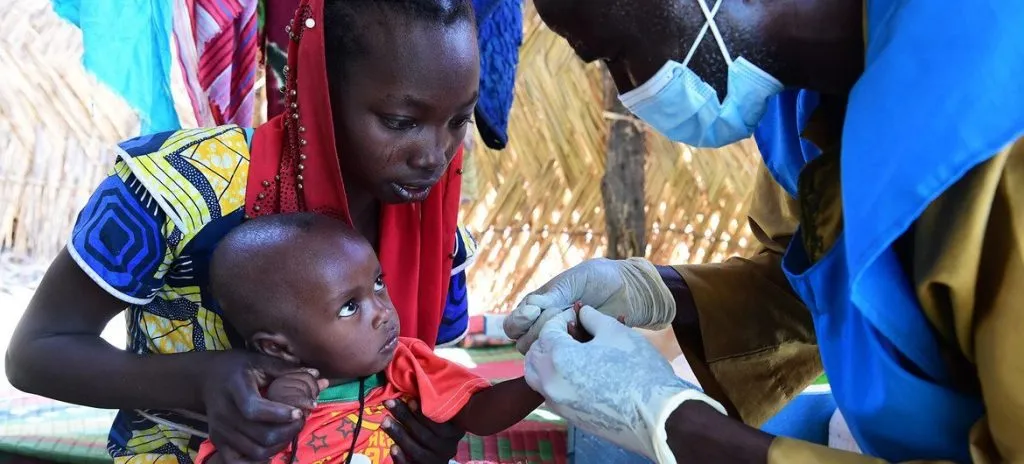
“Currently, a few cases of resistance have been reported locally, but no national data exists to assess the situation across the entire territory. My goal is to fill this gap,” specifies the researcher. The first stages of the study made it possible to identify the plasmodial species circulating in Guinea and to develop the methods necessary to assess resistance on a national level.
The One Health approach including humans and mosquitoes
The methodology adopted by Dr Kandet is based on the One Health approach, integrating both the study in humans and mosquito vectors.
“We intervene in regional hospitals to take blood and detect the presence of plasmodium. In positive individuals, we then go to their household to collect mosquitoes, in which we also look for the parasite. We then compare the molecular markers present in humans and mosquitoes,” he explains.
This double analysis makes it possible to identify the mosquitoes involved in transmission and to follow the genomic evolution of the parasite in the country.
Malaria, a public health problem
If malaria is a daily reality for many Guineans, the figures are just as worrying. In In 2018, more than 8,000 deaths from malaria were recorded in Guinea.
Despite some progress in the fight against the disease, current data remains insufficient to effectively guide strategic decisions. “The molecular aspect of plasmodium has never been explored in Guinea. My objective is to map the genomic structure of the parasite on a national scale to help decision-makers adapt malaria management strategies in the country”, he concludes.
The conclusions of this promising study should soon see the light of day.
Mamadou Kindy Bah
Read also
 EpidemicScience
Mosquito virus in Guinea: study reveals discreet circulation in eight regions
A survey carried out in eight regions of the country reveals widespread, but discreet, circulation of viruses transmitted by insects. Zika…
 HealthDisease
16 chemotherapy sessions: M’balia Batchily recounts her fight against breast cancer
A simple gesture, a mass discovered in time, sixteen chemotherapy sessions. Guest of the show Les Impertinents, on La Guinée Fréquence, M’balia…
 HealthDisease
Deafness in Guinea: when social perception complicates monitoring
On the occasion of World Deaf Day, celebrated each year on the last Sunday of September, deafness returns to…
Leave a Reply