

Kopèrè Botanical Garden: a plant world full of life and research
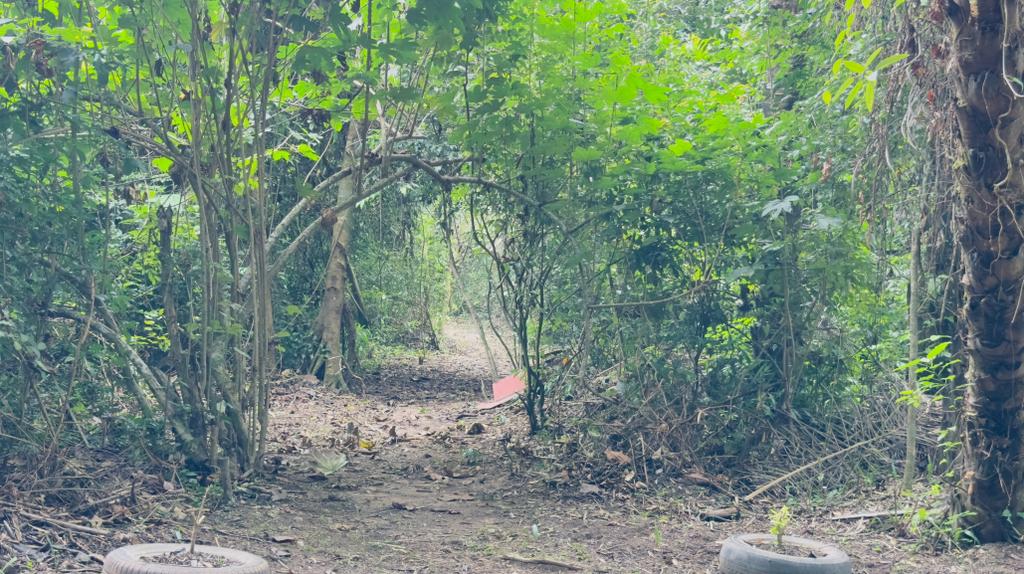
IRDPMAG Botanical Garden © Bagou BARRY / AJSG
Located about thirty kilometers from Conakry, Kopèrè, a small district of the Dubréka prefecture, hosts this green refuge which is home to many species of medicinal plants sorted from the 4 natural regions of the country and elsewhere in the world.
This garden, which extends over twenty hectares opposite a palm grove, is one of the components of the Institute for Research and Development of Medicinal and Food Plants of Guinea (IRDPMAG). Just like the Institute, the garden was created in March 2000, thus becoming the main element which enabled the establishment of the IRDPMAG in Dubréka.
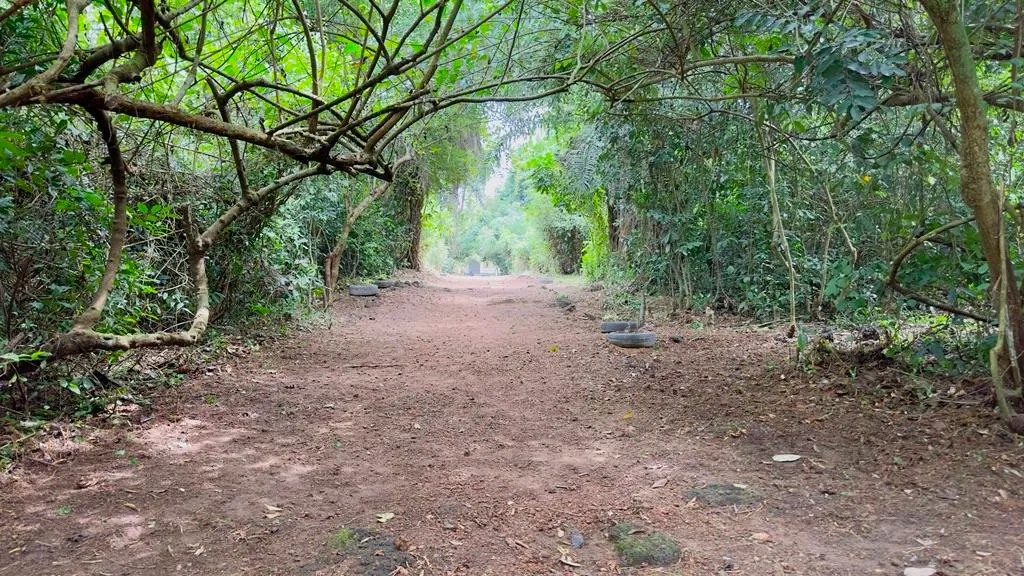
Away from the noise of the Guinean capital. And suddenly silence. Nothing but the wind that rustles the leaves in the treetops. Here and there, we hear the singing of birds at the end of the paths. Located near a magnificent mangrove, the Kopèrè botanical garden pays homage to Guinean vegetation:MYRTACEAE, LEGUMINOSAE, RUTACEAE, APOCYNACEAE, EUPHORBIACEAE, COMBRETACEAEand exotic plants.
Restoring Biodiversity
The Kopèrè botanical garden is also a place for the conservation of Guinean and African plants which are endangered due to urbanization and other societal practices. It is for this reason that those responsible are transforming it into a place for restoring biodiversity.
Through research carried out using a few species of plants, the Institute for Research and Development of Medicinal and Food Plants of Guinea has succeeded in developing a solution for the treatment of diabetes.“Diabetes is one of the pathologies that constitute a serious public health problem in our country. We are working to further improve the valorization of our pharmacopoeia in the context of diabetes management. We have formulations based on the microsphere which give very promising results in diabetic patients., affirmed Professor Elhadj Saidou Baldé, Director General of IRDPMAG.
Four regional branches
The Research Institute has researchers all over Guinea. It has four branches located in the four natural regions of the country. Its work is focused on epidemiological investigations (Malaria, Type 2 diabetes, high blood pressure), Ethno pharmacological investigation (Helminthiases, microbial infections, HIV AIDS, cancers, food supplements), the writing of Monographs. “We have already taken four medicines from this garden. A blood pressure medication from MHTA. We have produced another against malaria, a product against diabetes and finally another against dermatoses. And most of the plants in this garden are used either for just one or two, for a given pathology. We will not spend a lot of money to develop improved forms of drugs, or to isolate molecules that we could sell to international pharmaceutical companies.to emphasize the Dr Mohamed Kerfalla Camara, pharmacist and head of the Lower Guinea branch of the Institute.
Training too, this is one of the missions of the IRDPMAG
The training is essential and of high quality for students who want to pursue a career in pharmacognosy. It is with this in mind that the general management of the institute has adopted to be able to maintain the next generation in the medicinal plants sector. “ The other important aspect is also the participation of students in initial training and Masters. The next generation is also our concern, there is one thing that we are succeeding in, there are around thirty students registered in our Institute. And it is recognized today for registrations for the Doctorate. We have 6 doctoral thesis candidates of 3thcycle whose training will take place here», recalled Dr Mohamed Kerfalla Camara.
Several plants have already been the subject of study which has given glimmers of hope and medicine. This constitutes an encouraging sign for researchers and happiness for the populations who will thus find appropriate and assured care. Ouo Ouo Sangbé, has dedicated his life for ten years to pulling plants from the garden to heal people.“I have treated patients for several years, from migraine, male and female infertility diseases, diarrheal diseases and infections”, rejoiced this traditional healer from the Research Institute for the Development of Medicinal and Food Plants of Guinea.
The principle of saving vegetation
In this garden, all the vegetation is saved and protected. Nothing should be damaged or stepped on. Other varieties of recently cultivated plants are being demonstrated in the field of pharmacognosy. They have fairly obvious pharmacological effects which will direct the Research Institute for the Development of Medicinal and Food Plants of Guinea towards obvious therapeutic effects.
Amadou Dari Diallo
Read also
 EpidemicScience
Mosquito virus in Guinea: study reveals discreet circulation in eight regions
A survey carried out in eight regions of the country reveals widespread, but discreet, circulation of viruses transmitted by insects. Zika…
 HealthDisease
16 chemotherapy sessions: M’balia Batchily recounts her fight against breast cancer
A simple gesture, a mass discovered in time, sixteen chemotherapy sessions. Guest of the show Les Impertinents, on La Guinée Fréquence, M’balia…
 HealthDisease
Deafness in Guinea: when social perception complicates monitoring
On the occasion of World Deaf Day, celebrated each year on the last Sunday of September, deafness returns to…
Leave a Reply