

Dr Mamoudou Touré: the man who chose Guinea rather than German comfort
 Kindy Bah ·
· 296 views
Kindy Bah ·
· 296 views

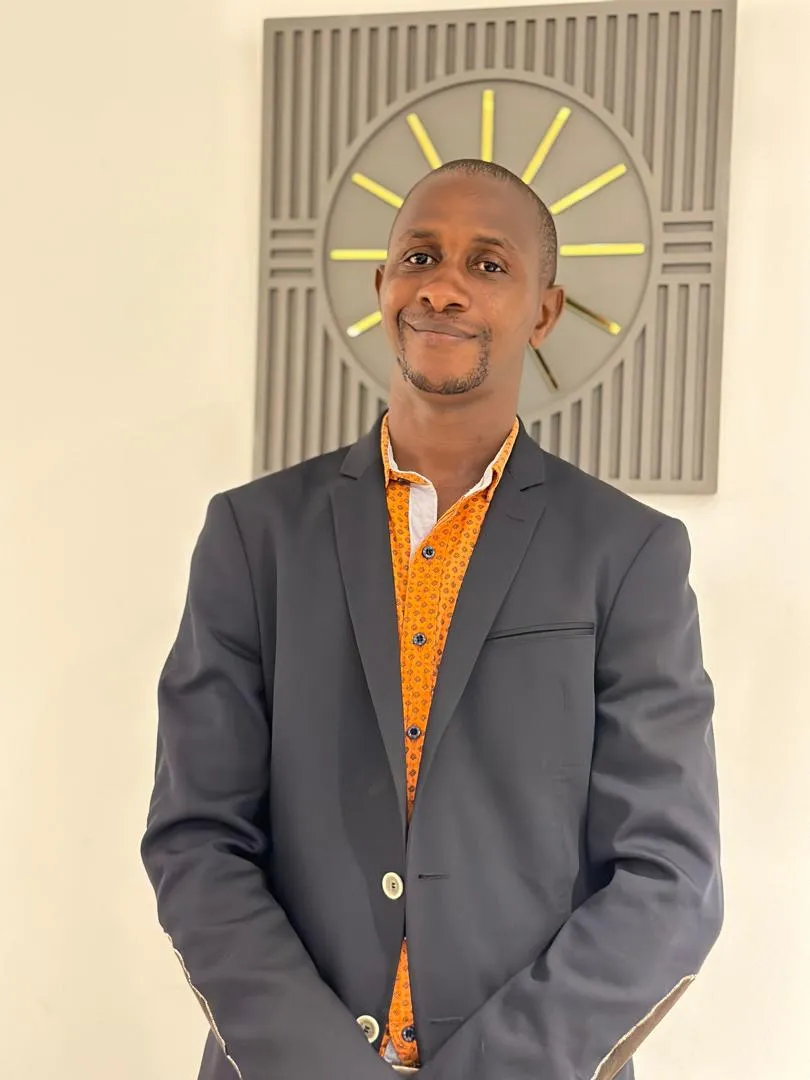
Dr Touré, teacher at UGANC in his office © Mamadou Kindy BAH
A destiny shaped between Kankan and Conakry
Born on November 12, 1974 in Conakry, Mamoudou Touré grew up between Kankan and the capital. Very early on, he dreamed of becoming a university physics professor. Two figures deeply marked his career: Albert Einstein, for his scientific genius, and Ahmed Sékou Touré, for his patriotic commitment.
A brilliant student, he joined the Gamal Abdel Nasser University in Conakry, where he specialized in the physics of electronic solid bodies. To finance his studies, he taught in several high schools while continuing his research in the library, at a time without the Internet. First in his class, he obtained the opportunity to continue his studies in Germany, thanks to his merit and his determination alone.
A promising career across the Rhine
At the International University of Bremen, he quickly established himself in the field of microelectronics. His work focuses on the design of microelectronic systems by photolithography, hardware programming in VHDL and the design of electronic systems. He obtained his doctorate, became a contractual expert, trainer and author of educational materials.
In 2007, his salary reached 3,420 euros per month, ensuring him a stable, comfortable situation and full of prospects. However, a call from Guinea will change everything.
“I did not come to Guinea to look for money. I came to serve. » These words alone sum up Dr Touré’s choice.
When a former colleague told him that physics was declining at UGANC and that students were turning away from it, he confided that he had “cried in his laboratory in Germany”. He then asked for six months' leave to come and teach in Guinea. The German administration accepted and even continued to pay him his salary during this period.
Once there, the dynamic changes quickly. Its concrete courses, telecoms, engines, electronics, mechatronics, make science tangible and students rediscover physics. The university asks him to stay. The Minister of Higher Education offered him integration into the civil service. After reflection, he definitively accepted, working for eleven months without pay, while his administrative file was regularized.
“The state trained me for free from primary school to university. I have a responsibility to my country,” he says.
Rebuilding the physics department
When he arrived, the laboratories were not very functional and the sector was struggling to arouse the interest of students. Gradually, a profound transformation took place under his leadership. The optics, mechanics, electricity and electronics laboratories have been refurbished and made fully operational. Practical work has become an essential component of the training. The department was modernized thanks to equipment financed by international partners, before a doctoral school in physics was created, followed by a master's degree in electronics and fundamental physics. “The physics department has become one of the most efficient in the country,” says Dr Touré.
The integration of digital technology in higher education
Head of the Physics Department at UGANC since 2018 and UNESCO-ISESCO national expert, Dr Touré is also at the origin of the digital integration project in Guinean higher education.
In this context, he created a digital teaching space, synchronized interactive classrooms operating even without an internet connection, supervised the design of the Gamal FM university radio station and supported university television projects. Its objective: “guarantee educational continuity even in the event of a health crisis”, making teaching accessible in all circumstances.
A German learning center
Faced with the numerous students forced to go to Senegal or Ivory Coast to learn German, he created a learning center integrated into UGANC. The results are convincing: the language has become compulsory for physics students, the courses are completely free, and German experts regularly come to organize the certifications.
“The center has become a national reference”, rejoices Dr Touré. This initiative has enabled many Guinean students to obtain study visas, thus opening up new international academic prospects.
Microelectronics at the service of Guinean students
Thanks to his connections in Germany, Dr. Touré obtains each year expensive licenses in the design of microelectronic systems, training normally inaccessible financially. These licenses are offered free of charge by its German partners, illustrating its commitment to providing scientific excellence without financial barriers for students.
A vision: scientific sovereignty
His vision goes far beyond the university setting. He advocates for the generalization of the Unitrain platform in all Guinean universities, for the modernization of scientific training and for the technological training of the armed forces. It also encourages the development of research into defense and guidance technologies. “Science is a pillar of national sovereignty”, he says, convinced that knowledge and technology are essential to the independence and development of the country.
A message to the diaspora
Dr Touré invites Guineans abroad to return and contribute to the development of the country. “If the State trained you, you have a moral responsibility towards your nation”, he recalls, emphasizing the importance of sharing skills acquired abroad.
In January 2024, in recognition of his exceptional commitment, he was promoted Knight of the Order of Academic Palms, a distinction which testifies to the lasting impact of his action in the Guinean academic landscape.
A scientist, a patriot, a builder
Father of eleven children, teacher, researcher and visionary, Dr Mamoudou Touré embodies a generation of African scientists convinced that development requires training. His journey illustrates a deep conviction. “Scientific progress is the key to Guinea’s economic and social development. »
Read also
 Education
At UGANC, 206 graduates called to transform their research into solutions for Guinea
The Gamal Abdel Nasser University of Conakry (UGANC) celebrated, this Saturday, September 26, 2026, the awarding of Master’s and…
 FactuSciencesEducation
Guinea: no, the government is not offering 960,000 computers to students, the announcement is false
A message circulating widely on WhatsApp claims that Guinea will distribute more than 960,000 free laptops to its…
 UncategorizedEducationFactuSciences
No, this video of Minister Bintou Keïta promoting a guide for high school graduates is not authentic
A video showing the Minister of National Education, Bintou Keïta, presenting a guide intended to prepare high school graduates for university has been circulating for...
Leave a Reply