

Dengue fever, yellow fever, West Nile virus: a Guinean study reveals silent circulation throughout the country
 By Alpha Oumar Bagou Barry ·
· 129 views
By Alpha Oumar Bagou Barry ·
· 129 views

Mamadou Boundoukhoura Bah researcher, carrying out molecular analyzes of samples at the Guineo-Russe laboratory at IRBAG © Mariame Diallo
A team of Guinean researchers has just published, in the journal Tropical Medicine and Health, the results of a vast survey carried out in 18 prefectures in Guinea. The finding is alarming: the three main viruses transmitted by mosquitoes dengue fever, yellow fever And West Nile, circulate much more widely than previously thought, often without causing visible symptoms. UniverSciences Guinea interviewed one of the researchers behind the study to understand the issues.
A seven-month field survey
Between May and November 2024, researchers from the Institute of Applied Biology Research of Guinea (IRBAG), in collaboration with the Guinea Virological Research Center and the Guinea Research and Training Center in Infectiology, traveled through the four ecological zones of the country: Lower, Middle, Upper Guinea and Forest Guinea. Their method: take blood samples from patients showing no symptoms, and capture mosquitoes using light traps, to look for the presence of the three viruses in both humans and the insect vector.
Surprising results
Of those tested, nearly one in five carried antibodies against dengue fever, almost one in four against yellow fever, and more than one in four against West Nile virus. In other words, a large part of the population has already been in contact with these viruses without even knowing it, since these infections often go unnoticed or are confused with a simple bout of fever.
This study is also the first to document the circulation of the West Nile virus in Guinea. A discovery that the researcher immediately places in its proper context: “The fact that this study is the first to document the circulation of the West Nile virus in Guinea concretely means that the virus is probably circulating silently in the country, without being integrated until now into the surveillance and diagnostic activities of the health system” specifies Mamadou Boundoukhoura Bah, researcher at IRBAG, lead author of the study.
Concretely, explains Mamadou Boundoukhoura Bah, human cases can be confused with other common fevers such as malaria, dengue fever, and yellow fever; due to non-specific symptoms, while laboratories do not always have the necessary tests to confirm infection with this virus. Result: it becomes impossible to estimate its real incidence or to identify a possible outbreak in time. For the researcher, this discovery goes beyond the simple identification of a new virus: “Above all, it reveals a gap in national capacities for detecting emerging arboviruses […] This discovery constitutes an early warning signal allowing the Guinean health system to move from a lack of research for WNV to active surveillance based on evidence. »
He also emphasizes the need for an approach “ One Health », which integrates the monitoring of mosquito vectors, but also of reservoir birds, cattle and ticks, in addition to human populations.
A real risk, but not to be dramatized
Should we be worried though? The researcher invites measurement. About 80% of infected people do not develop any symptoms. Among those who present, most suffer from a mild form, “West Nile fever” with fever, headache, muscle pain and fatigue. But the risk does exist in a minority of cases: “In a small proportion of cases, the virus can reach the central nervous system and cause severe neuro-invasive forms such as meningitis, encephalitis, and acute flaccid paralysis resembling poliomyelitis, with lasting neurological sequelae” explains Boundoukhoura.
The main issue, according to him, is precisely the possible confusion with malaria or dengue fever, which can delay the diagnosis of serious forms. Hence the importance, he insists, of detecting these severe cases early and better assessing the real extent of the circulation of the virus in the country.
Regional disparities which can be explained by local ecology
The study reveals that certain areas particularly stand out. The prefecture of N'Zérékoré, in the forest region located in the south-east of Guinea, has the highest rate for dengue fever, that of Kankan in Upper Guinea for yellow fever, and Forécariah in Lower Guinea for the West Nile virus. These differences owe nothing to chance, explains the researcher: “Forest Guinea is characterized by heavy rainfall, permanent humidity, dense vegetation and an abundance of reservoir birds for the West Nile virus, which constitute favorable conditions for the proliferation of vectors. »
In Kankan, it is rather the abundance of mosquitoes Culex quinquefasciatus and poorly controlled urbanization which would favor more active transmission, while Forécariah combines coastal wetlands and environments conducive to this same mosquito. A heterogeneity which, according to the researcher, is due to the combination of local ecology, the density of vectors, the level of sanitation in cities and human activities further exposing populations to bites.
This mosquito, very common in urban areas, has also been found to carry the West Nile virus in several prefectures, with an infection rate reaching 100% of the batches tested in N'Zérékoré, proof that the virus actively circulates between mosquitoes and humans, without having been detected until now. The researcher details the habits of this vector, particularly adapted to urban and peri-urban environments, where it develops in polluted stagnant water: clogged gutters, poorly maintained pits, wastewater, abandoned containers or used tires.
How to protect yourself?
To limit its proliferation, he recommends simple but regular actions, at two levels. For residents: empty or cover any container that can hold water, buckets, cans, basins, tires, jars, cans, gutters and regularly clean the gutters and surroundings of houses. On the side of the authorities: organize urban sanitation campaigns, ensure the cleaning of gutters and drains, improve waste and wastewater management, treat identified larval breeding sites, and set up entomological surveillance to early detect areas at risk.
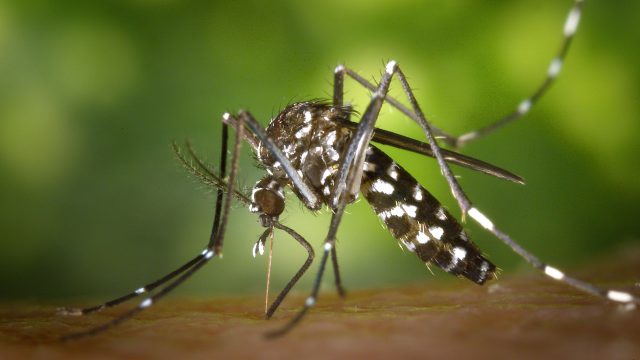
The study also shows that certain professions are more exposed: farmers and livestock breeders, who work outdoors at times when mosquitoes bite, have the highest exposure rates to dengue and yellow fever. The researcher recalls an essential detail about the behavior of the responsible mosquitoes: “Unlike mosquitoes which transmit malaria and bite mainly at night, Aedes bites mainly during the day, with particularly significant activity in the morning and late afternoon. This period corresponds precisely to the working hours of many farmers, ranchers and other outdoor workers, which increases their risk of exposure. »
His advice for this particularly exposed population: wear long, covering clothing during field work, avoid the accumulation of stagnant water around homes and enclosures, cover water reserves, use repellents on uncovered parts of the body, and quickly consult a health center in the event of sudden fever, severe headache or unusual fatigue. He concludes with a simple message: “The fight against these diseases does not only depend on health services; Every family and community can effectively contribute to reducing the mosquito population around their environment. Prevention today remains our best protection against dengue and yellow fever. »
An issue amplified by the development of the country
These results take on a particular dimension in the context of Simandou 2040 program, which foresees an acceleration of urban and mining development in Guinea. The researcher details this link, often underestimated: “The development of mining activities leads to significant population movements, particularly from mining areas to large urban centers. These movements favor the transmission of diseases. In addition, land exploitation and extraction work encourage the formation of pockets of stagnant water, which constitute larval breeding grounds conducive to the reproduction of mosquito vectors. »
Added to this is often poorly planned urbanization, which is frequently accompanied by a lack of sanitation and drainage infrastructure, favoring flooding and stagnant water, and therefore the proliferation not only of Culex, but also of Anopheles and Aedes, vectors of malaria and several arboviruses.
Confirmed scientific reliability, despite a methodological limit
The study has a technical limitation assumed by the researchers: due to lack of resources, they were not able to use the reference test (PRNT) to confirm certain serological results, a method which would have made it possible to rule out any risk of cross-reaction between similar viruses. In fact the Plaque Reduction Neutralization Test (PRNT) Protocol is a serological test used to measure the presence and level of neutralizing antibodies directed against specific viruses. This test is commonly used to determine the immune response to viral infections and the effectiveness of vaccines. This technique is currently considered to be a reference for the detection and measurement of antibodies that can neutralize viruses causing many pathologies.
Questioned on this point, the researcher is categorical: “this limit does not call into question the reliability of the results obtained, it simply refines their precision”.
Towards a national surveillance system
The IRBAG team does not intend to stop there. Several avenues of research are already underway: the study of animal reservoirs of these arboviruses, that of the different variants (serotypes) of the dengue virus in order to assess the level of risk, a phylogenetic analysis of circulating viruses, the study of the resistance of mosquito vectors to insecticides used in public health, as well as a socio-anthropological component on the factors which promote the proliferation of vectors.
But the most structuring issue remains elsewhere, as the researcher points out: “In the Republic of Guinea, there is no national surveillance system for arboviruses. Based on our results, we plan to initiate discussions with the Ministries of Health, Livestock and the Environment on the importance of setting up an arbovirus surveillance system using the One Health approach. »
A way for Guinean research to transform a scientific discovery into a concrete decision-making tool and to better protect, tomorrow, a population that is today unknowingly exposed.
Read also
 EpidemicScience
Mosquito virus in Guinea: study reveals discreet circulation in eight regions
A survey carried out in eight regions of the country reveals widespread, but discreet, circulation of viruses transmitted by insects. Zika…
 HealthDisease
16 chemotherapy sessions: M’balia Batchily recounts her fight against breast cancer
A simple gesture, a mass discovered in time, sixteen chemotherapy sessions. Guest of the show Les Impertinents, on La Guinée Fréquence, M’balia…
 HealthDisease
Deafness in Guinea: when social perception complicates monitoring
On the occasion of World Deaf Day, celebrated each year on the last Sunday of September, deafness returns to…
Leave a Reply