

Mangrove: a vital ecosystem at risk in the Guinean coastal zone

Destruction of the mangrove in Sondo, Coyah © Ibrahima Sory BAH / UniverScienceGN
Did you know that mangroves prevent coastal erosion, improve water quality, provide shelter, nourish and promote the reproduction of aquatic spaces while ensuring biodiversity. They also constitute a carbon sink par excellence. But this marine ecosystem is invaded by anthropogenic actions and uncontrolled urbanization, exposing us to worrying climate issues.
Although open and secondary forests are the most affected by deforestation, the mangrove is also undergoing worrying destruction in Guinea. Over the period between 2015-2020, it lost 9,072 hectares of its surface area while in 2014 it was 217,131 hectares according to the forest situation of the Forest Emission Reference Level (NERF) presented in the CDN of Guinea of 2021. The emission linked to the deforestation of the mangrove forest is 2,002,256 kilo tonnes carbon equivalent per year according to the same document.
This destruction of the mangrove unfortunately materializes in Sondo in Tabounsou in the prefecture of Coyah. All along this bay, the tropical forest represented by the mangrove is subject to uncontrolled construction and logging to the detriment of the environment, biodiversity and local communities.
It's getting hotter and hotter
Once a wetland par excellence, today, nothing like this is felt in this locality. The temperature is rising in this month of May, citizens are complaining of unusual heat. “Before when you went to bed, there was certainly warmth but no heating. However, between 1 a.m. and 2 a.m., the coolness takes over. If you are not used to the cold you will have to cover up. But now there is a kind of heating until the morning. Even when you are sitting under a mango tree there is a warm wind blowing. We have no solution to this problem. regrets Bangoura Aboubacar, native of Sondo.
The anthropogenic effect is perceptible in this area, piles of wood intended for heating are stored almost everywhere, bases for the fence of the houses go all the way inside the mangrove. Cross-shaped signs marked on certain walls indicate that they must be broken because of their aggression on the mangrove, sometimes through ignorance of the consequences. “They ignore the consequences of these wood cuts, because once these woods are cut, it not only degrades the environment, but also the rarity of fish species which do not develop at this level now, it becomes a problem for the local populations,” explains Dr Abdoulaye Ibrahima Camara, researcher at the Conakry-Rogbanè Scientific Research Center.
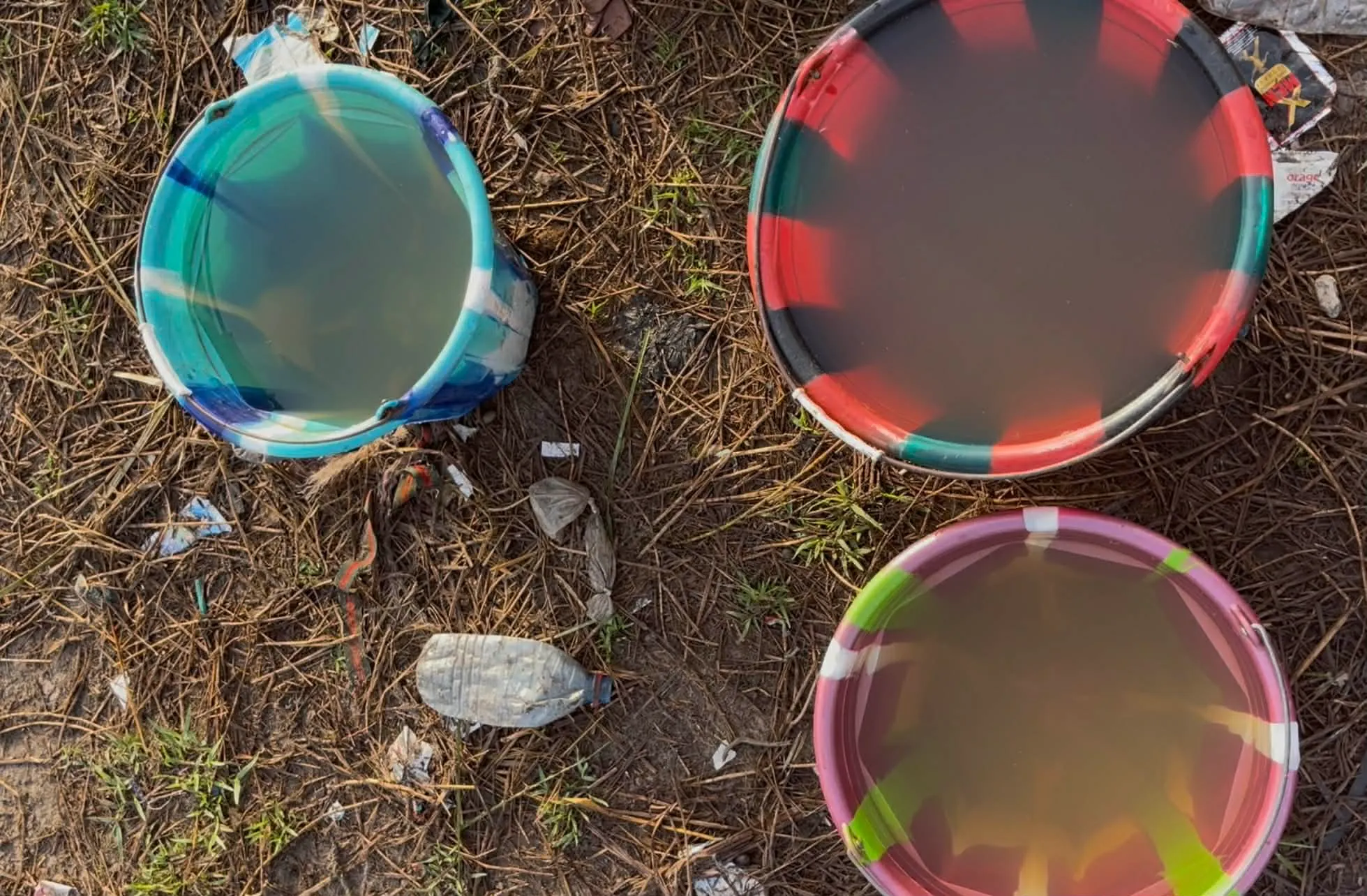
The advanced degradation of this area has already led to the disappearance of the rice fields which once guaranteed the food security of the local populations. “As you can see on these sites, they were rice fields, but because of the rise in saline waters, we lost part of this land,” notes the researcher.
All this is explained by the disappearance of the mangrove, because it plays the role of protector, that is to say when the mangrove is cut it encourages the rise of saline water which prevents the development of rice cultivation. The mangrove also plays the role of interface between the marine ecosystem and the terrestrial one, “it plays the ecological role because it is where several species of fish reproduce.”, specifies Dr. Camara.
The mangrove is also full of therapeutic virtues, notably rhizophora, avicennia and others like tamarinds which have nutritional value. “Rhizophora, called kinsi, is an anti-anemia, it treats hemorrhoids, fish also feed on its grains. When you take avicennia, it treats the disease of jaundice, malaria. So wanting to destroy the mangrove, people are hurting us,” says Bangoura Fode Bassy, researcher at the Conakry-Rogbanè Scientific Research Center.
How to stop the destruction of mangroves in coastal areas?
One of the activities carried out in coastal areas is salt farming. This activity consists of heating the brine to evaporate the water in order to obtain the salt crystals through traditional ovens which are at the origin of the cutting of the mangrove in particular the rhizophora and the mangrove trees. « We must exchange practices that degrade the environment in favor of certain more innovative and less polluting practices.. Today we must change these traditional ovens into modern ovens, instead of these ovens continuing to use wood or mangrove trees from the mangrove, they will now use electricity or other sources of energy to be able to reduce the excessive frequency of wood from cutting the mangrove." suggests Habib Ly, member of the NGO, Agir Contre Les Changement Climatique.
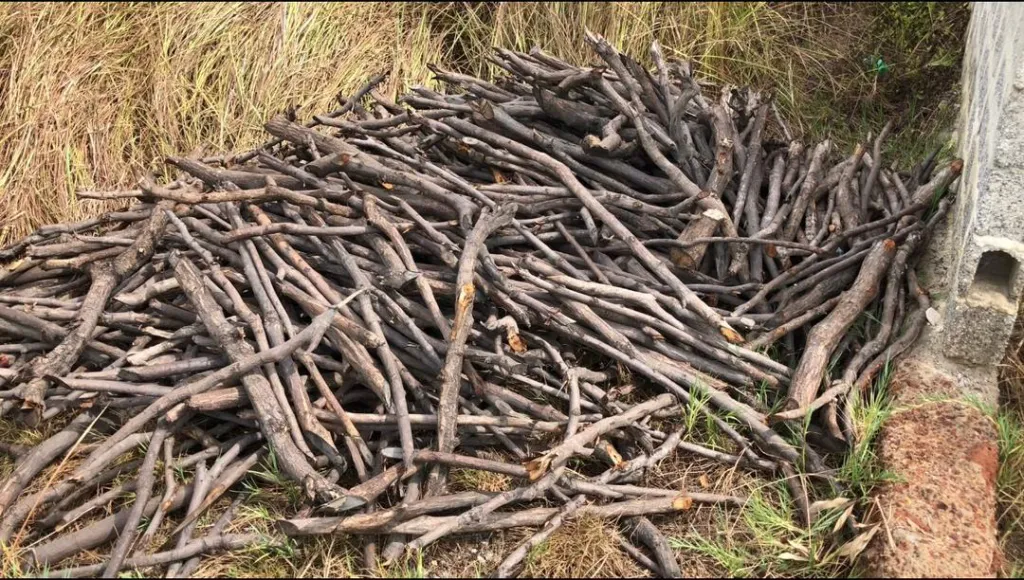
The development of improved stoves can help reduce the consumption of wood from mangroves. The solar tarpaulin is an experience that is much more in demand in coastal areas, this solution allows women to carry out their salt farming using solar energy without using wood from the mangrove.
Restoration is also an approach to reconstitute lost surfaces.
“The areas that are lost, we try to regain them by going directly through reforestation, we learned with the scientists that there are two main species which are generally reforested. The genus rhizophora and the genus avicenna", explains Aboubacar Soumah, mangrove restoration project coordinator at the NGO Guinée Écologie.
When the areas are large, they apply another strategy called natural regeneration, which consists of supporting nature to restore itself. For example in coastal areas abandoned by communities, where agriculture was practiced. Communities are building dikes that block the flow of water. “To promote the natural restoration of this ecosystem, we are helping to destroy and flatten these dikes, and to restore the water circulation system. So if natural systems are restored, grain is transported directly by tidal currents and promotes restoration of lost areas,” underlines Aboubacar Camara.
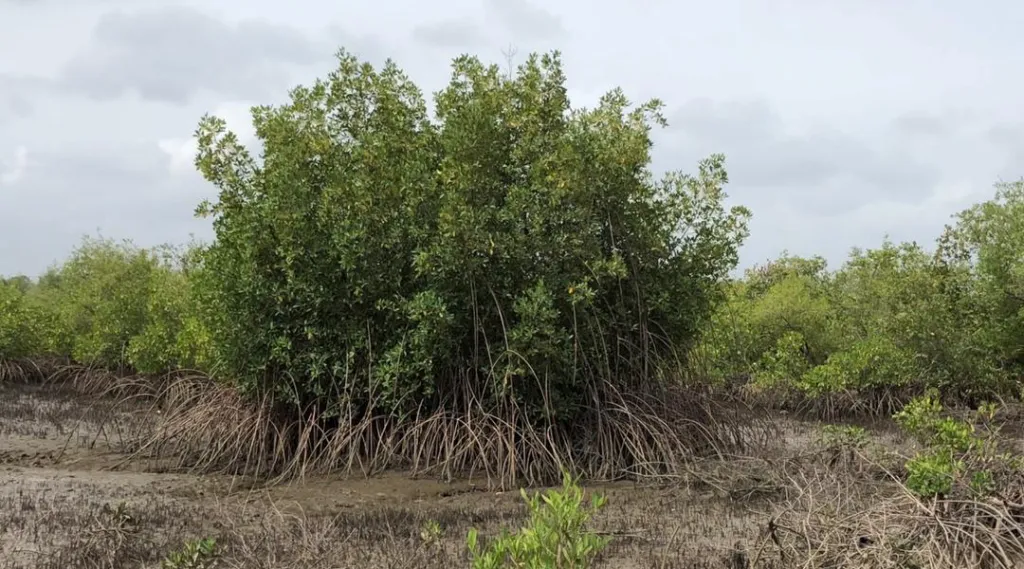
The destruction of the mangrove leads to the disappearance of aquatic resources and the therapeutic virtues they provide. It also destroys its carbon sequestration capacity, promoting global warming and episodes of flooding to the detriment of those who depend on it.
Ibrahima Sory Bah and Fanta Barry
This report is produced as part of the Terra Africa Project led by CFI Media.
Read also
 Environment
Seizure of 41 kg of seahorses and 26 kg of shark fins, the underside of trafficking that threatens marine biodiversity
At the end of May 2026, the NGO Eagle Guinea, in collaboration with the Guinean special services, carried out a major seizure,…
 Environment
Malé Camara, doctoral student, highlights the still under-exploited potential of the Upper Senegal River basin
A study which focuses on the identification of optimal sites for the establishment of micro-hydroelectric power stations in the Futa-Djallon basin. Its objective to contribute…
 Environment
Guinea/Lola: the last chimpanzees of Bossou disappear in silence
The survival of Bossou’s chimpanzees now depends on just three individuals. We are in Bossou, a sub-prefecture located more than 1000 kilometers away…
Leave a Reply