

Dar-es-Salam landfill: public health issues and waste recovery options

A cloud of smoke at the Dar-Es-Salm landfill © Ibrahima Sory / AJSG
The Dar-es-salam landfill receives around ten tonnes of garbage per day. Around twenty trucks unloading foul-smelling garbage go back and forth all day. The Dar-es-salam landfill is located in the heart of the capital Conakry, and has been there since 1987.
The residents of this popular neighborhood and its surroundings are exposed to the smoke released from the dump, night and day, continuously. Women, children, young people, old people, no one is spared. This constantly spreading smoke has harmful consequences on the environment and public health.
“This waste is the source of pollution of the atmosphere, it gives off a lot of smoke which is not only dangerous for health and the environment. We know today that landfills also contribute to greenhouse gas emissions which are the cause of climate change. I think that this situation requires reflection, because today we are talking about sustainable development which requires putting in place sustainable solutions.underlines Abdoulaye Fall, environmentalist and waste specialist, teacher-researcher at the University of Thiés in Senegal.

Landfill, a means of financing for some
This dump is a materialization for others, on site there are men, young girls, teenagers but also food sellers who are often scavengers who live from this waste, but not only that, they are exposed to enormous health risks, such as diabetes and other lung diseases.
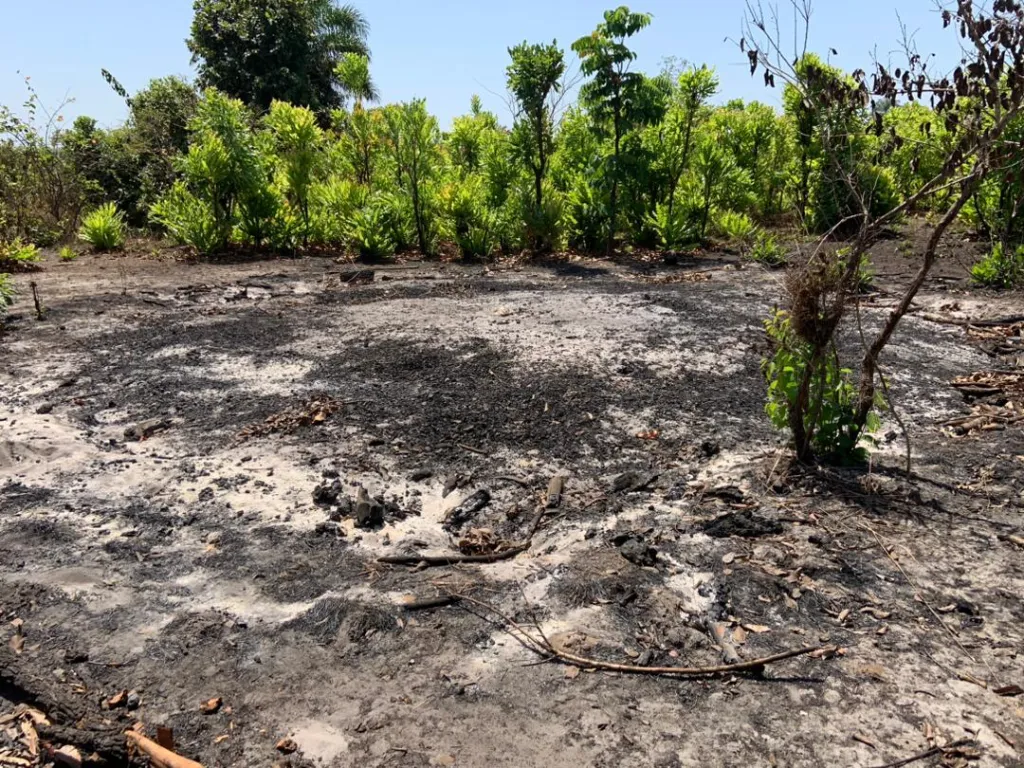
Smoke rising from waste dump in Dar-es-salam
On site, a young 15-year-old teenager told us that it is thanks to this landfill that she feeds her family.“Although I often fall ill, I have no choice, I have to come to work, I sort the garbage, I burn it to transform it into cooking iron to sell at the market. I sometimes earn 100,000 GNF or more per day. »
Without bibs, gloves or at least boots, there are more than 200 young people doing this recovery work at the Dar-es-salam landfill without any protection measures.“I grew up in this neighborhood, I have worked here for a long time, the smelly garbage bothers usnt least, it's the smoke that tires us, but we have no choice it's poverty, we sort the waste to go and resell in the factories whenever we can earnr up to 500,000fg in one day, many of my friends left for the West thanks to this rubbish»said Seydouba Soumah, in her twenties.
Threat to public health
Another fact, not the least, is that this landfill constitutes a threat to public health. At the Dar-es-salam landfill, homes are attacked on a daily basis by this pollution. “We are suffering a lot in this neighborhood. We are all sick, I went to the hospital, I was told to stop smoking even though I never pulled out a cigarette but with this smoke we are more than the smokers, all the old people have died. This smoke is not going to leave anyone, if you go back to the mosque everyone will cough. Our wells and our waters are polluted,”laments Facely Mara, sector manager of street 14 in the Dar-es-salam district.
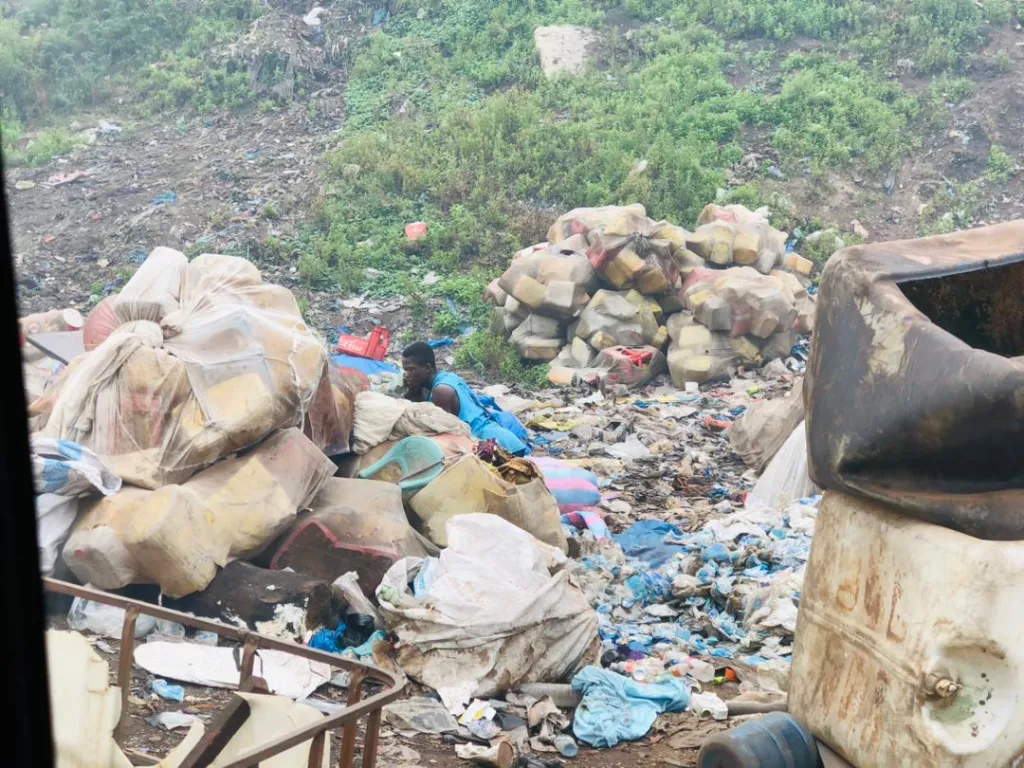
A young person in the middle of waste without a mask
We went to the AMECEL hospital which is located a few meters from the Dar-es-salam dump to verify these assertions by the sector head. Here, hundreds of patients are received per month, especially in the winter season.“We detect a lot of diseases here, among these diseases first, we note malaria, 8 out of 10 patients. Tuberculosis, we detect plenty of them”explains Dr Djibril Camara, head of AMECEL Dar-es-Salam hospital. The smoke that escapes from the dump is the main cause of several respiratory infections.“In the long run, this smoke can even cause lung cancer, because people simply do not have the same immune system, others are fragile, others are resistant”alerts the doctor, while urging people to protect themselves.“I recommend that people wear bibs, sleep under mosquito nets, make their homes clean. And also to watch over children, people who cough a lot because of the smoke, who are asthmatic or who have respiratory infections. I advise them to change their environment, leave the neighborhood and look for other accommodation.”concludes Dr Djibril Camara, head of AMECEL Dar-es-Salam hospital.
Recover waste
Today, Guinea must become aware of the value of waste. Moving the Dar-es-salam landfill to a new location could encourage the creation of processing factories. Abdoulaye Fall, Senegalese expert, underlines:“It is crucial to install technical education centers near Conakry to treat waste locally. We need to put in place rapid infrastructure to rehabilitate the site, exploring opportunities for large-scale waste recovery. Recycling must become central to reducing the volume of waste and establishing a circular system. »
Abdoulaye Fall adds:“Currently, the recycling rate in Guinea is less than 5%. It is essential to raise awareness and change our practices to promote a system where recycling prevails over accumulation. If we can go from 5% to 80% or even 90% recycling, with only 10% landfill, that would greatly solve the problem.” The specialist specifies that this requires“a lasting commitment and collective awareness. »
Environmental pollution and waste of all kinds found in this Dar-es-salam dump are a risk to public health. It is a major stage in the development of diseases such as lung diseases, eye diseases, skin diseases, asthma, etc.
This report is produced as part of the Terra Africa Project led by CFI Media.
Fanta Barry and Ibrahima Sory Bah
Read also
 HealthDisease
16 chemotherapy sessions: M’balia Batchily recounts her fight against breast cancer
A simple gesture, a mass discovered in time, sixteen chemotherapy sessions. Guest of the show Les Impertinents, on La Guinée Fréquence, M’balia…
 HealthDisease
Deafness in Guinea: when social perception complicates monitoring
On the occasion of World Deaf Day, celebrated each year on the last Sunday of September, deafness returns to…
 FactuSciencesMedicineHealth
Apple cider vinegar, cinnamon, green tea and cloves do not “kill” sugar in the body of diabetics
This 2 minute 36 second video (archived link here) in which the author claims to share tips that “can kill” sugar in…
Leave a Reply