

Covid-19: mobile triage units, a system to detect suspected cases
© Covid19
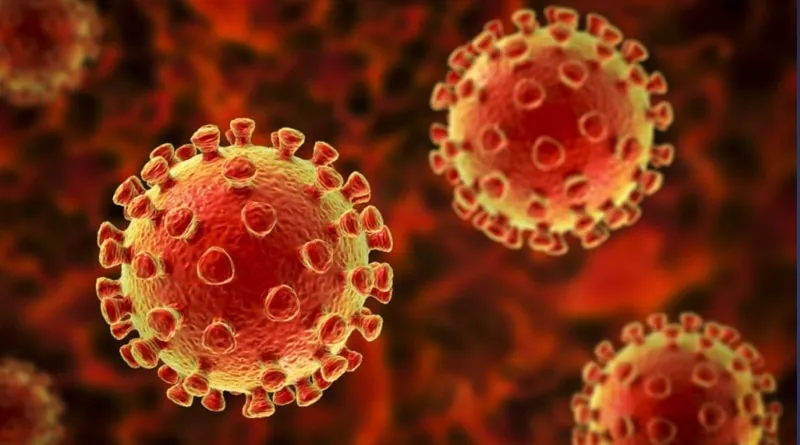
The mobile triage and covid-19 treatment units are set up by the National Health Security Agency in collaboration with the Ministry of Health, with the aim of minimizing the spread of the virus in society. How does the system for detecting suspected cases of covid-19 work in households? The head of mobile collection triage and care for the commune of Ratoma, Doctor Seydou Sidibé, responds to Universciences.
The care to investigate with a real desire in depth to find covid-19 patients, to avoid the rapid and uncontrolled spread of the virus, becomes a daily job for the mobile triage and covid-19 care units. “When someone tests positive, we contact the person concerned, going to them to speak. We decide together if home confinement conditions are available, we place the patient there and there is a team that comes by to give medication and monitor progress. If this is not the case, we transport him to the CTEPI which is ready to receive him depending on his clinical condition and his age,” explains Doctor Seydou Sidibé, responsible for mobile collection triage and care for the commune of Ratoma.
Strict control over other family members
When a person is declared positive for the disease and taken into care, the mobile triage units follow up with other members of the family to ensure that there has been no contamination. “There are investigation teams made up of doctors who know about epidemiology who are the first to contact a patient if he is tested and who ask him to list his contacts. And these people with their numbers are monitored for a period of time, if during this time they develop symptoms, however minor, they are tested. There are teams who take mobile samples who come to homes to do the test. And these teams most often come in ordinary cars or on motorcycles, if there is positivity, we transport the person concerned to the CTEPI,” says the manager of mobile pick-up triage and care.
Without the help of the population, supported by the efforts of the ANSS, there will be no impact.
The most effective way to eradicate the coronavirus is collective awareness, so everyone contributes their two cents in the fight against the virus by respecting barrier gestures, by taking the test, by getting vaccinated, without which the ANSS and the mobile triage units will have done well to control the pandemic, it will amount to nothing. “We call for everyone's civic conscience so that everyone knows that their responsibility involves lives. Because as long as we don't decide together, whatever means the State and the ANSS put at our disposal, we will always have difficulty getting rid of this disease." warns Doctor Sidibé.
Performance of sorting units
These mobile triage units, which are established in the 5 municipalities of the capital Conakry, offer optimal performance for the triage and treatment of people infected with covid-19 while protecting the rest of society.
Comments collected by Lancinet Sidibé
Decryption: Amadou Dari Diallo
Read also
 EpidemicScience
Mosquito virus in Guinea: study reveals discreet circulation in eight regions
A survey carried out in eight regions of the country reveals widespread, but discreet, circulation of viruses transmitted by insects. Zika…
 HealthDisease
16 chemotherapy sessions: M’balia Batchily recounts her fight against breast cancer
A simple gesture, a mass discovered in time, sixteen chemotherapy sessions. Guest of the show Les Impertinents, on La Guinée Fréquence, M’balia…
 HealthDisease
Deafness in Guinea: when social perception complicates monitoring
On the occasion of World Deaf Day, celebrated each year on the last Sunday of September, deafness returns to…
Leave a Reply