

Premarital consultation: a simple gesture for a healthy marriage

Doctor Talks To His Patient In Hospital Office © Ninthgrid
In Guinea, premarital consultation remains little known and little practiced, although it makes it possible to detect and prevent certain communicable or hereditary diseases. Dr Édouard TOLNO, general practitioner at the Ratoma health center, calls for the popularization of this approach to protect couples and their future children.
The premarital consultation is a medical examination carried out before marriage in order to detect illnesses that could affect the health of the future spouses or that of their unborn children. It generally includes a blood test, serological tests and depending on the history, genetic examinations.
Dr Édouard TOLNO general practitioner specifies: “This examination makes it possible to identify pathologies such as HIV, hepatitis B, syphilis, sickle cell anemia or even certain blood abnormalities. Knowing your state of health before marriage helps avoid family drama. »
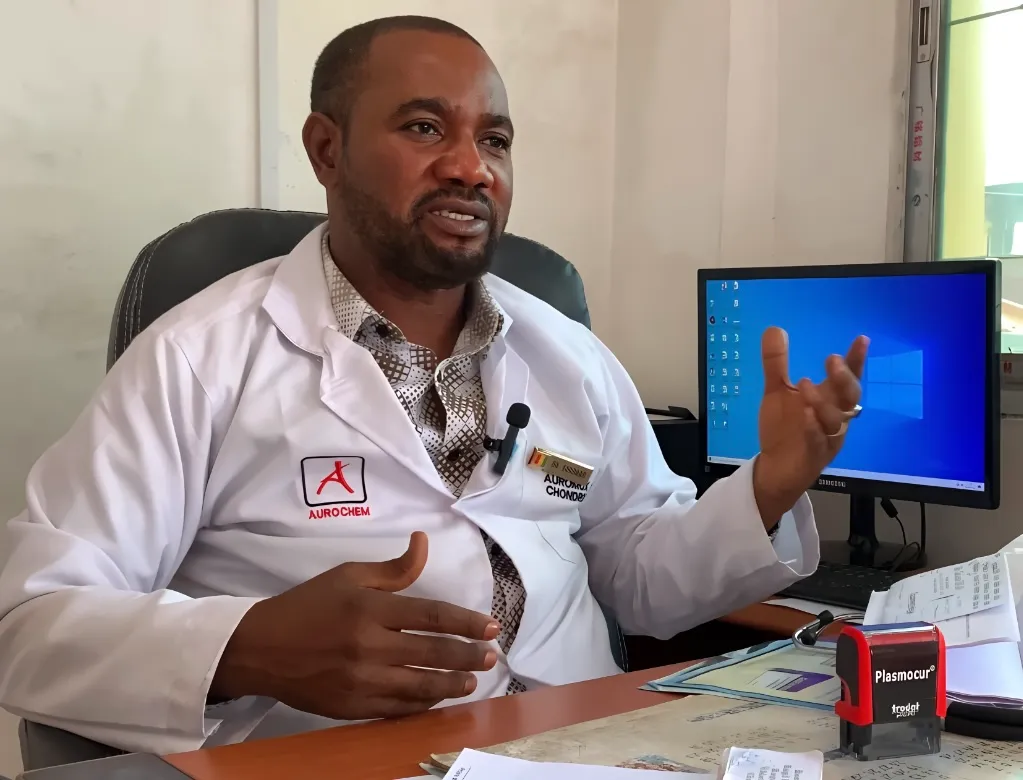
Early detection for adequate care
The premarital consultation is not limited to a simple health check: it can also prevent couples from making decisions with serious consequences for the health of their future children. For Dr. TOLNO: “in some couples, screening reveals that both partners carry the sickle cell gene. In this case, it is possible to explain the risks to them and offer appropriate medical follow-up. Whatever the result of the consultation, it cannot under any circumstances cancel a marriage already concluded. It aims above all to inform, screen and protect the health of the future spouses, but generally occurs before the official union. »
An unusual practice in Guinea
In Guinea, premarital counseling is not obligatory, unlike in certain countries where it is required by law. This absence of a legal framework, combined with a lack of awareness, explains its low adoption rate.
“Many young people do not know about the existence of this exam, or wrongly think that it can prevent their marriage. In reality, it is a process of protection, not a ban”, emphasizes Dr. TOLNO.
Opinions of future spouses
Luis Robert, a citizen met at the Cimenterie, is in favor of the idea of carrying out this consultation with his future spouse before their union.
“Despite the fact that in our country we do not have enough information about this medical examination, I will be happy to do it. This will allow my future wife and me to be aware of possible complications that may affect our children,” he says.
For his part, Alhassane Cheick, a citizen met in Kabgelen, seems better informed.
“Personally, I completely agree to carry out this consultation with my future wife. In fact, I even feel obliged to do it. Because this will allow me to prevent certain illnesses from my future children. If this consultation is carried out, this will allow us to avoid certain disabilities or illnesses for an innocent child. he specifies.
To better inform young people, specialists recommend carrying out information and awareness campaigns in the media, schools and places of worship.
“The more couples are informed, the more they will understand that health must be a priority before marriage. It’s insurance for a more serene family future”, concludes Dr Édouard TOLNO.
Kadiatou SOW
Read also
 HealthDisease
16 chemotherapy sessions: M’balia Batchily recounts her fight against breast cancer
A simple gesture, a mass discovered in time, sixteen chemotherapy sessions. Guest of the show Les Impertinents, on La Guinée Fréquence, M’balia…
 HealthDisease
Deafness in Guinea: when social perception complicates monitoring
On the occasion of World Deaf Day, celebrated each year on the last Sunday of September, deafness returns to…
 FactuSciencesMedicineHealth
Apple cider vinegar, cinnamon, green tea and cloves do not “kill” sugar in the body of diabetics
This 2 minute 36 second video (archived link here) in which the author claims to share tips that “can kill” sugar in…
Leave a Reply